Jumătate de om mort călare pe jumătate de viață - A Film for Friends
Ioana Satmari • 9/7/2024A zoom on a whole character and yet half of one. A little theater, a little The Death of Mr. Lăzărescu, tied together with an energetic writhing of that whole character who is half-dead.
The intention of the film A Film for Friends, directed by Radu Jude, seems unpretentious; it doesn’t aim to be a pristine film, just a credible one. It could be split almost evenly in half, where the climactic moment appears. Heavily seasoned with the background of a divorced father (Gabriel Spahiu), unloved by his children, who, out of a sense of vengeance, decides he wants to commit suicide… the climactic moment… part two. It starts captivatingly and awkwardly, then dilutes as the acting seems to cloud over and drift away from believability, but clears up again at the climax. The half-character appears, Șerban Pavlu, the neighbor in a fur coat, who does nothing but marvel at the man crawling in front of him, covered in blood.
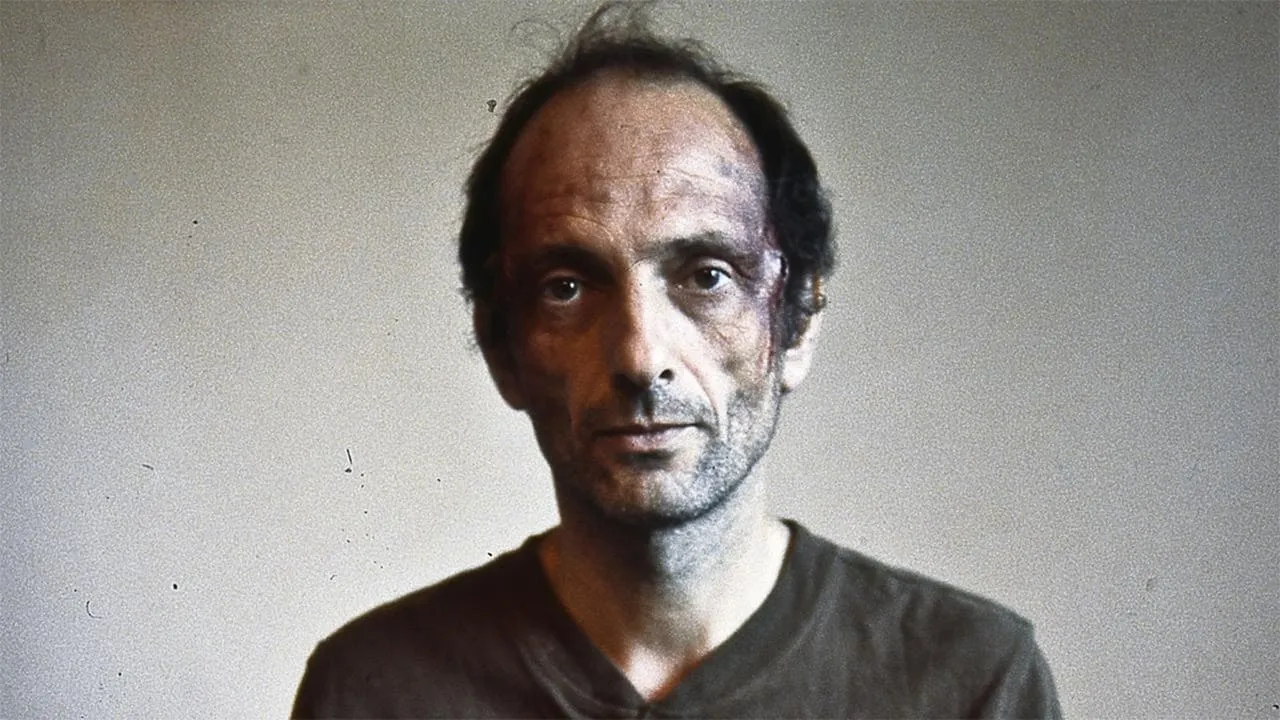
So, in the first part, there’s a half-bald man, in a yellowed shirt, eaten by life, the exact kind of person you’d see doing an ad for liver medicine, begins filming himself, reading his will. He quickly loses his temper. But he doesn’t draw us into his story. Everything he says so fiercely, the reproaches directed at his family, feel distant. We can’t grasp the underlying pain that’s eating him up. What is it that’s so overwhelming that it’s driven him to suicide? We don’t see the despair, we don’t see the anger. It’s like meeting a drunk man at the bus stop who, without asking, tells you everything that’s happened in his life. The story (and he) wavers, and you wouldn’t take him at his word. You can’t empathize because a limit is placed from the start: we don’t have the full context. After the first 10 minutes of monologue, which draw you in because they’re unusual, you start to get the idea, you grasp it, and then you lose it. The repetition of the reproaches, the measured monologue, and the way it’s delivered sink you further into the state of now what’s next?.
The second part takes on a completely different tone. What should have been a frantic effort to save a man’s life turns into a scene where the neighbors just sit and watch, fairly indifferent, at the body struggling to survive. It seems that if it were their cat, they’d put in more effort. They keep circling him, moving him around, dabbing his face with blood, but they don’t do much to keep him alive. And at one point, it ends. It’s as if you’re not sure it’s over, but everything stays still for too long.
A Film for Friends ends with three bottles of detergent in different colors placed on a shelf, the reflection of an icon, and a roll of toilet paper on a blood-soaked couch. The film is so simple, and perhaps simplistic, that it gives the impression it would have worked better as a stage play.