Three stories about death and a doll - The Beast
Ioana Satmari • 9/28/2024Close to something coherent and enjoyable, The Beast (Le Bête), directed by Bertrand Bonello, had the potential to be a seamless, breath-taking film. Instead, it’s one you have to frown at to make sense of things. Only by the halfway point, where it finally reaches its climax, do the pieces start to fit together somewhat.
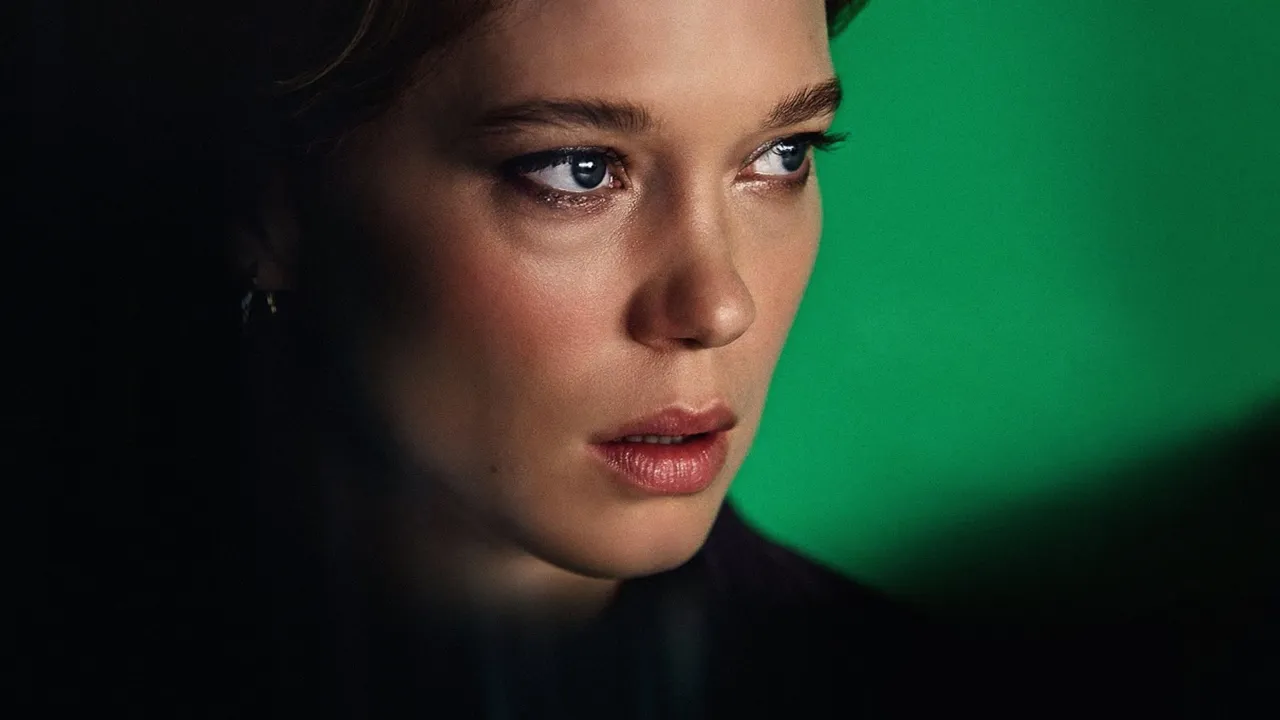
The Beast wanders in a realm similar to Dupieux’s universe, but not as psychedelic—more subtly awkward. What saves the film is Léa Seydoux. Her performance is ethereal, distancing itself from the surrealism of the film, balancing it out in the most powerful and targeted ways. Intended as a romantic-sci-fi drama with hints of thriller, the film is overly restrained and diffuse. There are too many story threads that don’t connect, leaving the viewer unsure of where to focus. You end up feeling tired afterward, wondering what you’ve gained from it. Did it scare me? Move me? Make me ponder anything?
There are three stories: one set in 2044, the central one portraying the present, one in 1910, the most unique and layered with meanings, and one in 2014, which feels like filler, meant to connect the other two. The film is like a doll you can manipulate to do anything. Sometimes, you create your own story guided by what you see, yet things still don’t seem to connect. Bertrand didn’t intend for this, but he leads you astray because we, as people, think in an orderly fashion—something he often references as a human flaw in the film. When there’s no order, we’re thrown off balance. It takes time to recover and realize: wait, I can believe anything about what I’m seeing. The doll itself becomes a symbol of the film.
What does this film want us to focus on? The terrible, uncontrollable fear we have of AI and our imagination that everything will become robotic, AI-colonized. Gabrielle (Léa Seydoux) lives in such a world. She wants to find a job but is held back because of her emotional flaws. The more emotionally unstable and sensitive you are, the more unfit you are for work. The solution is to make a small incision, both theoretical and practical, into her memories from past lives to resolve these emotions. Thus, we see who she was in 1910 and in 2014.
In 1910, during the Belle Époque flooded by the Seine, Gabrielle, a pianist married to a good but dull man, meets Louis (George MacKay) at a soirée. They recall meeting some time ago in Naples, and Louis begins courting her. They spend more and more time together.
The story then jumps to 2014, where Gabrielle is an actress struggling to make a name for herself and is also house-sitting for a wealthy person in an upscale LA neighborhood.
The film and Bertrand’s stories engage in a continuous three-way dance. The Beast is romantic, a thriller, and sci-fi. The first story is the romantic one, the second is the thriller, and the third is the sci-fi. In each of them, it’s not only about the (re)meeting of the two but also Gabrielle’s encounter with the doll, which becomes a symbol of death. We see how Gabrielle eventually meets her end, and the doll is there with her. It’s fascinating how the doll evolves: from porcelain, to one that speaks, to a real person with the role of a doll. Does death evolve, too?
Though all these ideas seem unreal and seek to mesmerize, it feels like too much. Symbols eagerly grab your attention, but it’s your mind that should have been taken. While you try to piece together symbols, signals, and feelings, the action doesn’t help you see beyond the events.
It feels as if the director may have lost control over the unfolding events. Perhaps he needed to turn his own film into a puppet and see in which world he’d dance with it. The Beast, Bonello’s tenth feature film, may need room to breathe. It’s like a painting you need to look at from a distance to see what it is and up close to see its true colors.