Semi-transparent packaging - Photophobia
Ioana Satmari • 10/12/2024If it has a barcode, it probably has an expiration date. It’s a product. And if it’s a product, it likely has packaging. The expiration date? We don’t know. The packaging? That’s the film. And the product… is the people. The barcode?
The barcode is the film’s title itself. Against a black background, in white, tight and stacked, the letters spelling out “photophobia” look like a barcode. It suggests that the documentary Photophobia, directed by Ivan Ostrochovský and Pavol Pekarčík, scans the early days of the war in Ukraine.
The first five minutes, setting the scene, are motionless. The tempo of the film is set by bombs falling in a rhythmic pattern, dropping with increasing rarity until they find a steady beat—a beat that your own breathing soon matches. You’re breathing more slowly now, in sync with the explosions. This is the film’s wrapper. Then the image cuts back to the barcode (the title).
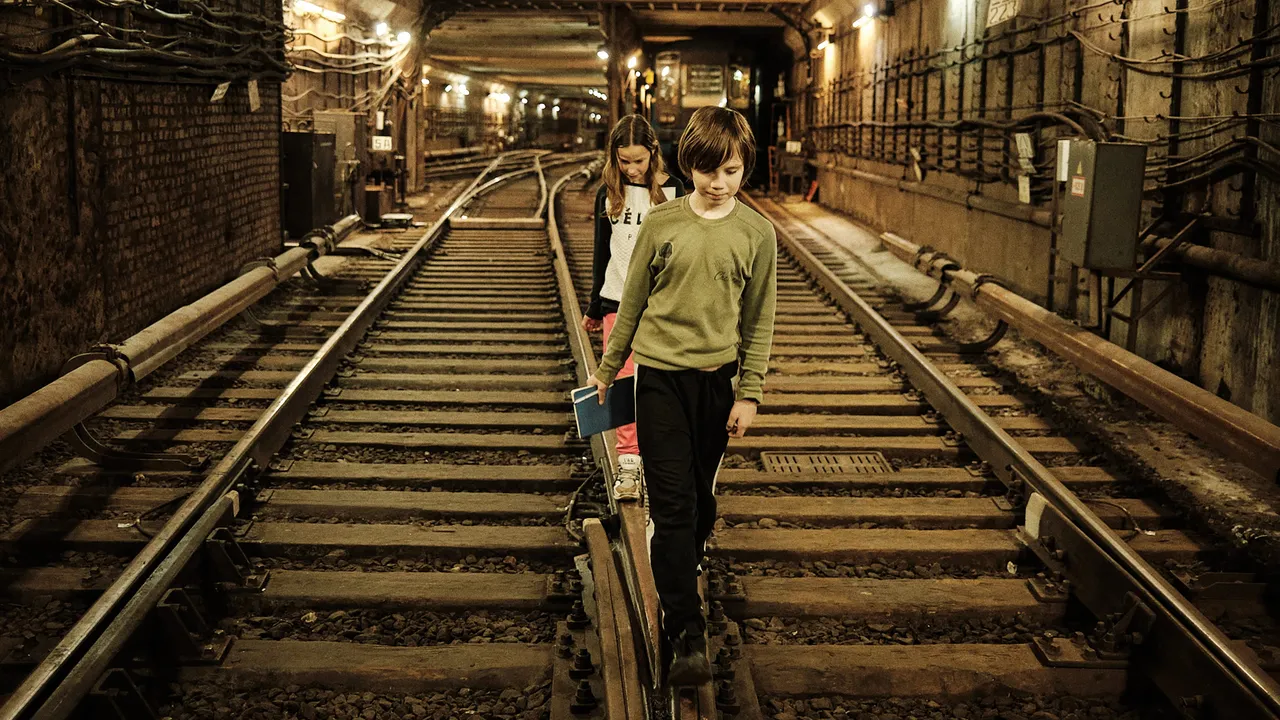
There’s irony in how the metro station, turned into a bomb shelter, has become a home-like space for children. It’s their new “home”. How will they see this place when they return in years, with different minds? Will they think, “Look, I spent two months of my childhood here”? Will they show others, “See, this is where I played as a kid”? What will they feel when they remember, “This is where I ran on the tracks, explored trains, and wandered into forbidden spaces”?
It’s strange how the film almost gilds the lives of two children, Nikita Tyshchenko and Viktoriia Mats, in a lightly superficial glow as they run and play restlessly along the train tracks. These moments don’t feel at odds with the world portrayed earlier but rather serve as a kind of synthetic sweetener.
Niki and Vika live in Kharkiv, Ukraine’s second-largest city after Kyiv. All 1,500 people who’ve taken refuge in the station are portrayed as the war’s cheap product. These people, maybe the war’s most affected victims, haven’t seen daylight in months. Out of fear. They are the face of the war beyond Ukraine’s borders. Their faces appear in the news. These people, lying between metro pillars, sleeping alongside their pets. And what’s on the pillars? Advertisements. Ads for lawnmowers, for grass they haven’t seen in over two months. Ads for clothes, while they’ve been wearing the same ones all this time. Ads for perfume. Ads for cosmetics. Ads for fans. Ads for drills. Ads for electric scooters. Ads for treadmills… Pointless, as they sit watching the sunlight glint on the subway entrance tiles.
The film flows slowly, pinching out moments from the lives of those 1,500 people and following as Niki and Vika become friends. Photophobia shows how these people are slowly withering, and we watch from afar, hoping they will recover.