Bridge Over the Abyss of Abandonment - Basia: Three Short Stories
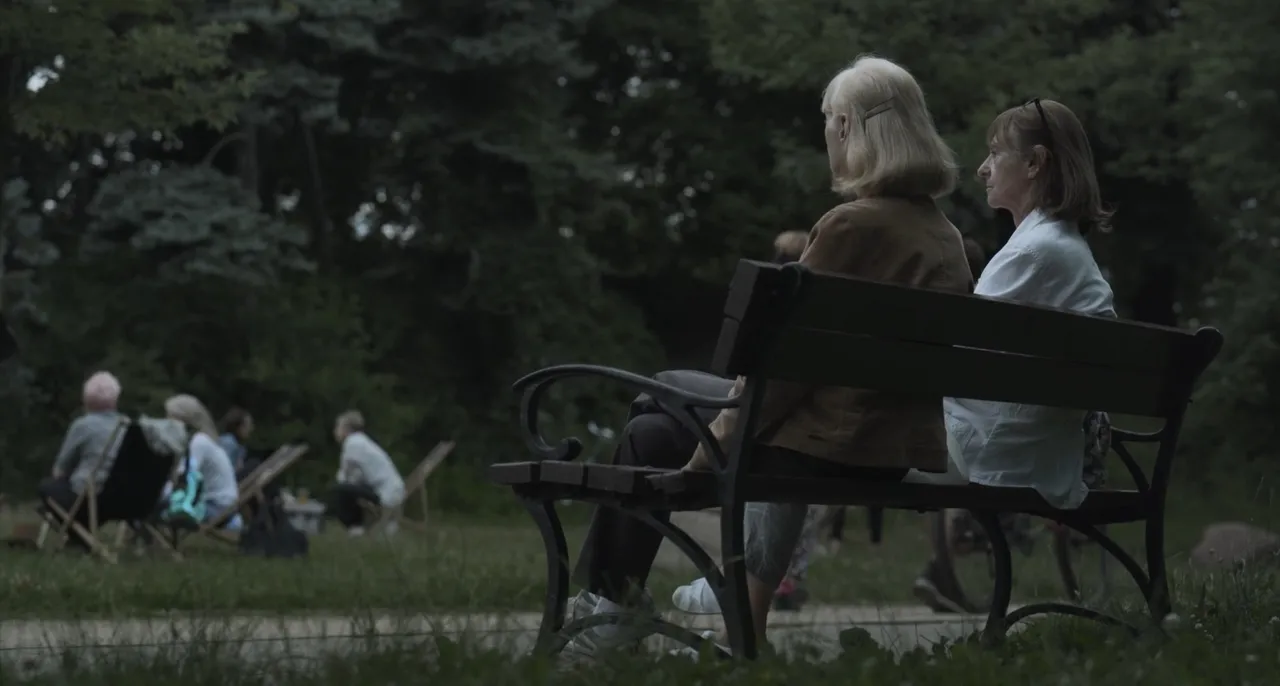
Ioana Satmari • 10/10/2024The stony mise-en-scène, with a golden-gray Eastern European touch, leaves you staring into the sun. In a seemingly abandoned Poland, Basia: Three Short Stories, directed by Mateusz Pietrak, offers a meditation on preparing for death. Barbara (Barbara Zgorzalewicz-Fryzlewicz), an 80-year-old with light-colored hair, says goodbye to her younger sister and niece, sometimes with a smile, sometimes with tears hidden beneath her scarf.
The three chapters about her life in Poland, spanning 30 minutes, don’t feel like they say much. Each is marked by a sound like an elevator ding. Ding!, and we’re taken to another perspective on her experiences. We move through her life in relation to her sister, her niece, and her professional side. Amid moments meant to feel authentic, Barbara casts quick, unsettled glances toward the camera, as if seeking reassurance. It makes you wonder what Barbara is trying to confirm, why she feels the need to check in with us, who aren’t even there.
The film calls for not abandoning those close to death. “Stay with us (those on our deathbeds), because when we leave, it won’t be simple, we’ll be leaving from you,” says a line in the play that concludes the film (chapter three, her professional side). This kind of departure spans many concepts and involves many people. It applies to us all. It’s a perspective, really. But this conflicts with her advice on relationships: she encourages her niece, if she likes someone, not to seem interested, to keep her distance, letting attention trickle out sparingly. Controlled closeness with people is a problematic way of protecting oneself from potential disappointments. Fear and avoidance of failure, whether emotional or professional, are increasingly common around us, sometimes amplified by herd mentality. Failing is part of making things work. It’s all about perspective, looking back on one’s life.
Basia: Three Short Stories feels like the kind of documentary that waits for something to happen, as though it has run out of ideas. Today’s documentaries aim to tell the truth about what happens around us, not about how things appear. What’s the difference? Our perception varies, even with what’s deemed human or “must-know.” That must doesn’t really exist. In society, must has easily been conflated with want or should, so we rarely question free will. The idea that a documentary must tell a truth is not really true; it should present a perception. A documentary records a perspective, which is always the view of the one creating it. Thus, it becomes an act of ego, rooted in character or personality.
And so, Basia: Three Short Stories presents a perspective on a world I don’t yet perceive. That doesn’t mean I deny its existence or avoid it. Simply, although I recognize so nostalgically the world Barbara inhabits, I cannot internalize, assimilate, or appreciate it beyond that.