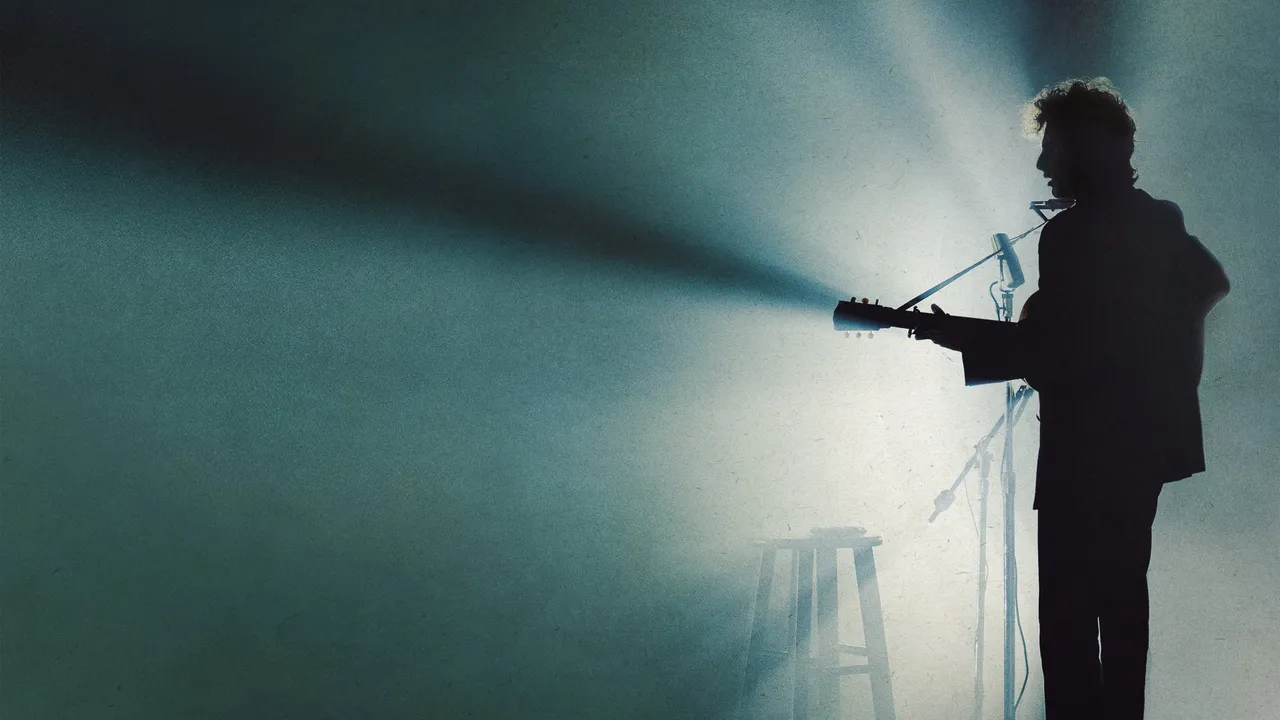
An incomplete known - A Complete Unknown
Ioana Satmari • 4/18/2025It’s strange, yet not at all surprising, how people cling to a fixed image when making a biopic about a legendary figure. How an entire kingdom cannot be torn down or seen differently in a summary of just a few dozen minutes of footage. Everything you see on screen is not reality, it’s an echo of a reality already mythologized, rearranged with intent. The mythology surrounding a figure cannot be dismantled by a feature film, no matter how meticulous. A filmed story is never enough to overturn an impression. Nor to complete it with something truly new. Everything is merely a reaffirmation of what must remain. Of what must be seen. Of what must not be forgotten.
So, what remains? What is the purpose of a biopic? Is it just a simplification for those who don’t know the story? A reminder for those who have forgotten it? The idea of a reminder seems quite plausible. I was surprised when I walked into the theater and saw a bunch of old ladies arriving “with the girls” from the block. They shuffled around, looking for their seats, draped in long fur coats and brimmed hats. Bob Dylan gets old ladies out of the house. It’s a bizarre phenomenon: the audience doesn’t come for discovery but for confirmation. People who don’t want to see who Dylan was, but rather who Dylan is in their minds. A Dylan fixed in memory and carefully reconstructed on screen. At the premiere of A Complete Unknown, directed by James Mangold, I saw the audience that once worshipped him, now coming for a pilgrimage of nostalgia, disguised as cinema.
Like many biopics that consume enormous budgets on music rights and historical re-enactments, A Complete Unknown is limited by what it must show and what it must leave out, moving within the boundaries imposed by its own subject. So we see reality through a lens. But what gets lost? How do you choose what is most important in a life so deeply lived and relived in the public eye?
Too often, the biopic reduces an artist to obstacles and genius. The pure genius, creating and moving forward, incapable of tethering to the world. The misunderstood genius. The exploited artist. Exploited by the audience, by managers, by producers, by friends, by their own emotions, even by themselves. Meanwhile, talent becomes a limitation. Artists inevitably end up devoured by their own genius. By that thought, “thought” is too weak a word for what truly fuels creation, but let’s call it that—that thought that pushes them forward, that drags them along, just to feed and placate the crowd.
A Complete Unknown captures, in a classic manner, a slice of Bob Dylan’s life, from the moment of his discovery to his defiant transition from folk to rock ‘n’ roll. A “Here, take this music!” thrown at those who wanted only the same Dylan, hurled at an audience that wanted him frozen in a single moment. But this isn’t just a change in style, it’s a rebellion, an act of defiance, a reclaiming of artistic identity. It’s the moment an artist decides they no longer belong to the audience. Because that is, in fact, the artist’s tragedy: not just that the audience idolizes them for what they create, but that they love them only for what they were. And they want them trapped in that moment. Anything else is betrayal. You, the artist, do not exist as yourself, but as what the world has decided you must be. So what do you do? Keep singing the same verse just because that’s what’s expected? Because you are paid to be who you were, not who you have become?
As a successful artist, you are indoctrinated to believe that you must please your audience, that without them, you do not exist. The audience nurtures the artist’s sickness more than it heals it. And so, the artist ends up bound to their own art not because they love it, not because they recognize themselves in it, but because they’ve been taught that the world loves them for what they create. Worse still, the audience does not love you regardless of what you create. The audience only loves that particular song, that moment, that version of you that stuck. They pay to hear who you were, not to witness who you are becoming. And you remain trapped there. In a self that no longer exists. You are forced to believe in the same thoughts and emotions that, for you, may no longer be relevant, no longer real. Because if you don’t believe, it’s no longer real for the audience either.
The audience, in its hunger, holds you in place and refuses to validate any new version of you. And producers steer you only toward what is demanded. This can be seen in the cracks that slip through the frames of A Complete Unknown. No matter how much a biopic wants to be true to reality, it never can be. Not that this is its goal. But it is expected to be “authentic.” And this authenticity is just another construct. The truth of Dylan’s story paradoxically lies in what it does not emphasize. In the ending that wasn’t shown. In the change presented as an accident, as a breaking away from everything that made and brought him there.
A Complete Unknown is about a sick audience. One that claims to want to see evolution, but in reality, seeks confirmation of an ideal. Yet the artist is in constant flux. Just like you. That doesn’t mean you always evolve. There is no such thing as pure progress, stagnation, or decline. The world we live in is more lateral, abrupt, and radial. You cannot expect someone to always be as you first saw them.
In the film’s story, which you can easily look up with a quick search, the only thing left is the issue of expectation. Or perhaps of the unexpected. We anticipate changes that do not align with what we want to see. With the right kind of change. The one that was foretold.
A Complete Unknown is not just about Bob Dylan, but about all artists who become prisoners of their own image. The audience elevates them to a pedestal only to keep them there, frozen in a convenient, recognizable, timeless version. James Mangold builds Dylan’s story in an elegant but not radical way, oscillating between reverence and reconstruction. Just as Dylan always avoided being fully known, the film follows his example: it shows transformation but does not fully explain frustration. Playing with chronology and incorporating emblematic moments from his career, the biopic is more a montage of successive identities than a clearly defined story. We see Dylan rejecting expectations, fleeing from labels, yet paradoxically, through this very re-enactment, the film reaffirms his place in collective mythology. In the end, no matter how much it tries to (de)construct him, it only reconstructs him for a new generation. True change does not come from a well-chosen frame or a memorable line, but from what remains unsaid. From what the artist experiences beyond the stage, beyond the screen, where no one can claim a piece of them.